
Basement Waterproofing Brooklyn | Protect Your Home From Leaks, Mold, and Foundation Damage
Basement Waterproofing Brooklyn: Protect Your Home From Leaks, Mold, and Foundation Damage
A wet basement is more than an annoying problem. It can quietly damage your foundation, ruin stored belongings, lower indoor air quality, and create costly repairs over time. In a place like Brooklyn, where many homes are older and weather conditions can be harsh, basement moisture issues are especially common.
If you are searching for Basement Waterproofing Brooklyn homeowners can truly rely on, it helps to understand why these problems happen, what warning signs to look for, and which solutions actually work. From historic brownstones to newer townhomes, every property faces its own challenges. The key is catching moisture problems early and choosing the right waterproofing approach before minor issues become serious structural damage.
Why Basement Water Problems Are So Common in Brooklyn
Brooklyn homes deal with a unique mix of conditions that make basements more vulnerable to leaks and moisture.
Many neighborhoods are filled with older homes built long before modern waterproofing systems became standard. That means foundations may be made from porous materials or may have aged enough to develop cracks, weak joints, or worn protective layers.
Brooklyn also has areas with a high water table, especially in neighborhoods closer to the waterfront. When groundwater rises, pressure builds against basement walls and floors. Over time, that pressure can force water through tiny openings that may not even be visible at first.
The local climate adds another layer of risk. Heavy rain, snowmelt, humidity, and coastal storm activity all put more stress on foundations. Even homes that seem dry most of the year can suddenly develop water problems during major storms or seasonal shifts.
On top of that, many properties have drainage issues. Poor grading, clogged gutters, broken downspouts, and hard surfaces that slope toward the house can send water directly to the foundation instead of away from it.
What Basement Waterproofing Really Means
Some homeowners assume basement waterproofing is just a coat of sealant or waterproof paint. In reality, true waterproofing is much more complete.
A proper system is designed to stop water intrusion, control moisture, and protect the foundation over the long term. Depending on the property, that may include drainage systems, sump pumps, vapor barriers, crack repair, exterior membranes, or a combination of these methods.
This is also where many people confuse waterproofing with damp-proofing. Damp-proofing can help slow moisture, but it is not built to handle strong water pressure. Waterproofing is meant to create a more reliable defense against both moisture and active water intrusion.
For Brooklyn basements, that difference matters.
Signs Your Basement May Need Waterproofing
Some warning signs are obvious. Others are easier to miss until the damage gets worse.
Standing water, damp floors, or water stains on the walls are the most direct signs that moisture is getting in. If you see puddles after rain, that is a strong sign your basement needs professional attention.
Musty odors are another major clue. A basement should not smell damp or stale all the time. That odor usually points to hidden moisture, mold, or mildew growth.
You may also notice peeling paint, bubbling wall coatings, or white chalky residue on masonry surfaces. That white residue, often called efflorescence, happens when water moves through the wall and leaves behind mineral deposits.
Cracks in the floor or foundation walls should never be ignored either. Even small cracks can let in water, and horizontal cracks may suggest more serious pressure on the structure.
Other red flags include rust on appliances or exposed metal, excess humidity, visible mold, and walls that look like they are bowing inward.
Common Causes of Basement Moisture in Brooklyn Homes
Water can enter a basement in several ways, and the source is not always obvious.
Groundwater Pressure
One of the biggest issues is hydrostatic pressure. This happens when water builds up in the soil around your home and pushes against the foundation. As that pressure increases, water can seep through cracks, joints, or weak spots in the concrete or masonry.
Surface Drainage Problems
Rainwater should move away from your home, not toward it. But many Brooklyn properties have grading issues, damaged gutters, or short downspouts that let water collect near the foundation. Over time, that pooling water finds a way inside.
Foundation Cracks and Aging Materials
Older foundations are more likely to have wear, movement, and surface breakdown. Even minor settling can create openings that allow moisture to pass through.
Interior Moisture Sources
Not all basement moisture comes from outside. Plumbing leaks, appliance issues, condensation from HVAC systems, and poor ventilation can all add to the problem and make the basement feel damp even when there is no visible flooding.
Basement Waterproofing Brooklyn Homeowners Should Know About
There is no one-size-fits-all solution. The best waterproofing method depends on the source of the problem, the condition of the foundation, and the severity of the water intrusion.
Interior Basement Waterproofing
Interior systems are often used to manage water that has already reached the foundation. These systems help collect and redirect water before it spreads through the basement.
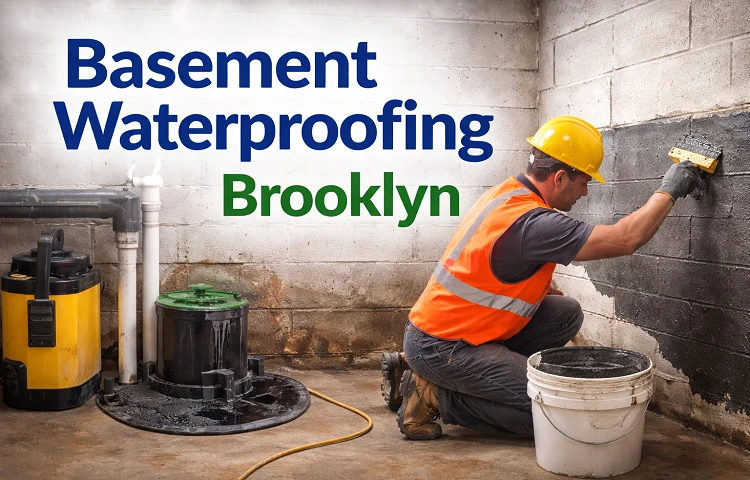
A common option is an interior drainage system, often installed along the perimeter of the basement floor. This system channels water into a sump pump basin, where it is safely pumped away from the home.
Sump pumps are especially important in homes that deal with regular seepage or rising groundwater. A quality sump pump with a battery backup can keep working even during storms and power outages, which is a major advantage in emergency conditions.
Interior waterproofing may also include vapor barriers and crack injection. These solutions help reduce moisture and seal problem areas from the inside.
This approach is often more affordable and less disruptive than exterior work, making it a practical choice for many homeowners.
Exterior Basement Waterproofing
Exterior waterproofing deals with the issue at the source by preventing water from reaching the foundation walls in the first place.
This usually involves excavating around the home, repairing foundation cracks, applying a waterproof membrane, and improving drainage around the footing. In many cases, drainage boards and gravel systems are also added to move water away more efficiently.
Exterior waterproofing is often the most complete solution, especially for serious or ongoing water intrusion. It can be a larger investment, but it provides long-term protection and helps reduce the pressure placed on the foundation itself.
For homes with severe leaks, repeated flooding, or structural concerns, exterior waterproofing may be the better choice.
Foundation Repair and Waterproofing Together
In some cases, waterproofing alone is not enough. If the foundation has large cracks, bowing walls, or signs of movement, structural repair may need to happen at the same time.
This can include crack injection, reinforcement, stabilization systems, or other repairs designed to restore the strength of the wall before waterproofing materials are installed.
Treating both the water issue and the structural issue together usually leads to better long-term results.
The Benefits of Professional Basement Waterproofing
A professionally waterproofed basement does much more than stay dry.
First, it protects your foundation. Water damage can weaken walls, damage floors, and lead to expensive structural repairs. By stopping moisture early, you reduce the risk of major problems later.
Second, it improves indoor air quality. Damp basements create ideal conditions for mold and mildew, and those contaminants do not always stay in the basement. Air moves through the whole home, which means moisture below can affect comfort and health upstairs too.
Third, waterproofing protects property value. Buyers are quick to notice signs of basement moisture, and even small water issues can hurt resale appeal. A dry, well-protected basement makes a home more attractive and gives buyers more confidence.
Waterproofing can also make the space more usable. Whether you want safe storage, a laundry area, a home gym, or a finished lower level, none of it works well in a damp basement.
What the Waterproofing Process Usually Looks Like
A professional basement waterproofing project usually starts with a detailed inspection. This helps identify where the water is coming from and whether the issue is caused by exterior drainage, groundwater pressure, foundation cracks, or interior moisture.
From there, the contractor recommends a solution based on the condition of the home and the severity of the problem. Some basements need only a targeted repair, while others need a full drainage and waterproofing system.
Installation may include crack sealing, drain placement, sump pump setup, wall protection, or exterior excavation, depending on the plan.
Once the work is complete, the system should also be tested and explained clearly so the homeowner understands how it works and what maintenance may be needed over time.
How Much Basement Waterproofing Costs in Brooklyn
The cost of basement waterproofing in Brooklyn can vary a lot. Interior waterproofing tends to be more budget-friendly, while exterior systems and structural repairs usually cost more because of excavation, labor, and materials.
Several things affect pricing, including the size of the basement, the depth of the foundation, how easy the property is to access, and whether there is existing damage that needs repair first.
While waterproofing is an investment, it is often far less expensive than dealing with foundation failure, mold remediation, ruined finishes, or recurring flood damage. In many cases, paying for the right solution early saves a significant amount of money later.
How to Choose the Right Waterproofing Contractor
Not every contractor has the same level of experience, and basement waterproofing is not a job you want handled with guesswork.
Look for a company that understands Brooklyn homes, soil conditions, drainage concerns, and building requirements. Local experience matters, especially in neighborhoods with older foundations or flood risk.
It also helps to choose a contractor who provides a detailed inspection, explains the recommended solution clearly, and offers strong workmanship support. A rushed estimate or a one-size-fits-all proposal is usually a warning sign.
The best contractors focus on solving the cause of the problem, not just covering up the symptoms.
Final Thoughts on Basement Waterproofing Brooklyn
Choosing the right Basement Waterproofing Brooklyn solution can protect your home from leaks, mold, structural damage, and rising repair costs. In a borough where aging foundations, groundwater pressure, and storm-related moisture are common, taking basement water seriously is one of the smartest steps a homeowner can take.
A dry basement means more than comfort. It means better air quality, stronger structural protection, safer storage, and greater long-term value for your property. Whether your home has a minor seepage issue or ongoing flooding concerns, the right waterproofing plan can make a lasting difference.
If you have noticed damp walls, musty smells, cracks, or recurring basement moisture, now is the time to act. The sooner you address the issue, the easier it is to protect your home and avoid bigger problems later.
#BasementWaterproofingBrooklyn #BrooklynHomeImprovement #FoundationRepair #WetBasementSolutions #BasementLeakRepair #SumpPumpInstallation #HomeWaterproofing #BrooklynContractor #MoldPrevention #FoundationProtection